Laboratory Earthquake Physics and Fault Mechanics
Watching earthquakes prepare under controlled conditions
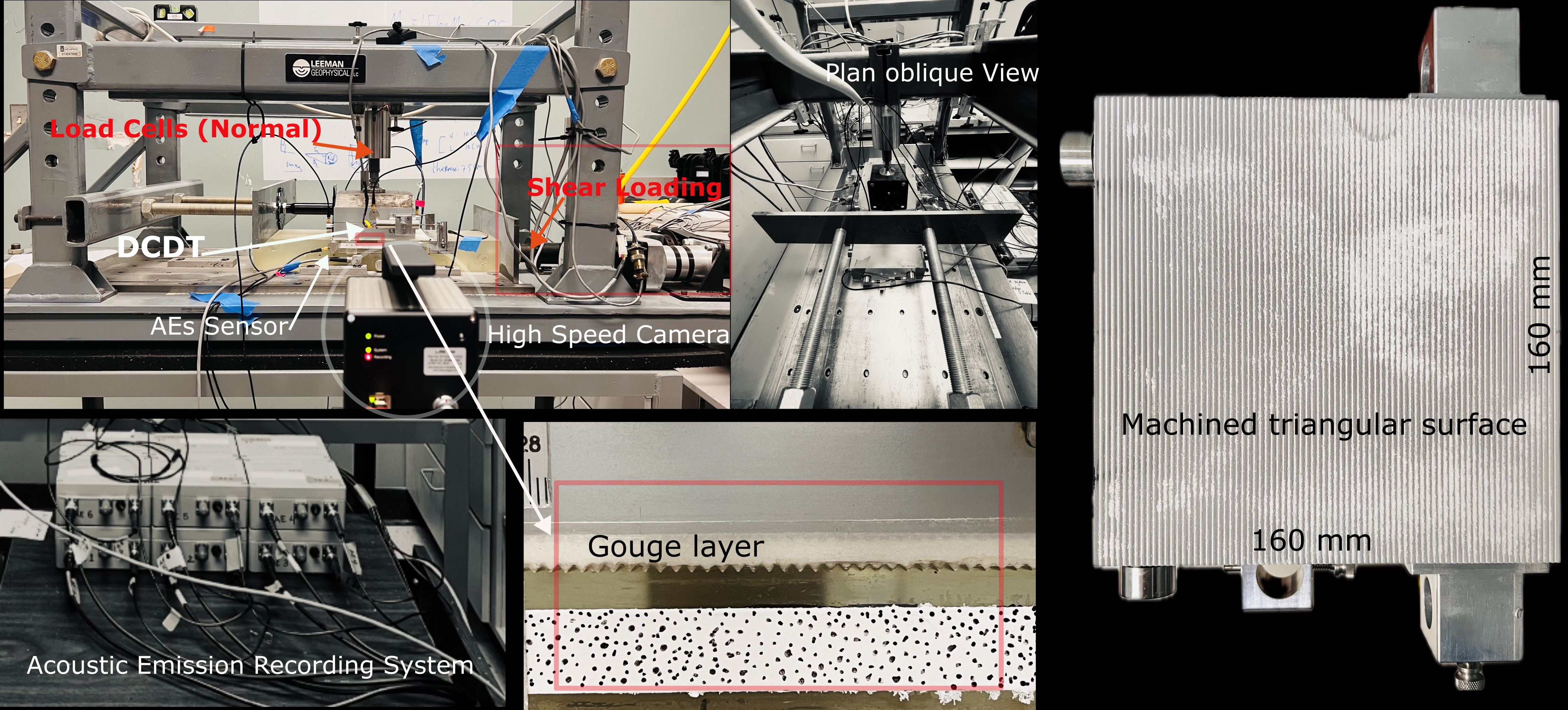
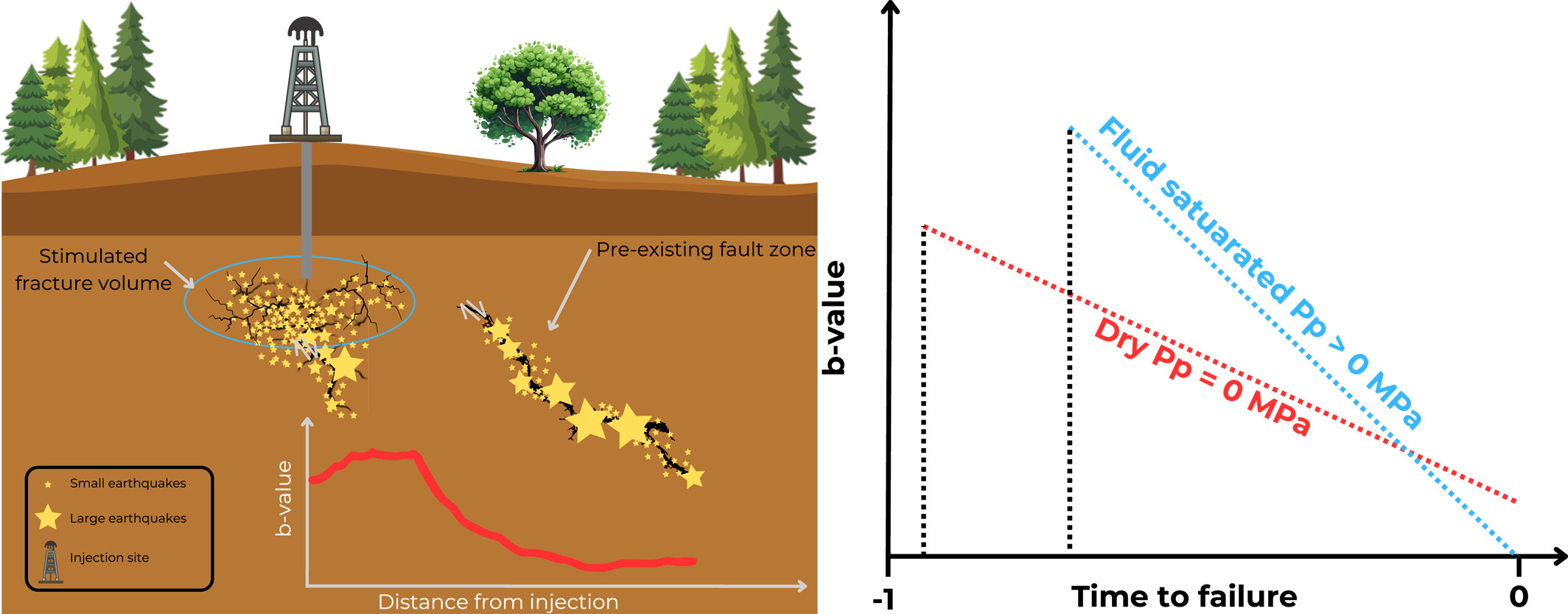
Natural faults rarely let us watch an earthquake prepare: the stresses, fluids, and fault structure at depth cannot be measured directly. In the laboratory, they can. Experimental faults make it possible to control normal stress, loading rate, pore pressure, and fault composition, and to record the full process from loading to rupture. These experiments integrate mechanical measurements of stress, slip, and dilation, acoustic emissions that act as miniature earthquakes, and imaging of the deformation field, using direct shear tests on granular fault gouge and triaxial tests on faulted rock. Across scales from grain-scale heterogeneity to meter-scale fault behavior, my research examines how fault composition and heterogeneity shape the preparatory phase before failure, what makes earthquake recurrence predictable or unpredictable, and how pore pressure and stress change seismicity statistics. The goal is to identify which laboratory signals can be recognized on natural faults and used to improve forecasting and hazard assessment.
- Scale
- Grain scale to meter scale